
Trade Secret Misappropriation in California: Elements, Remedies, and Deadlines
When a competitor or departing employee walks off with your confidential business information, California's trade secret law provides powerful remedies. Understanding the elements of trade secret misappropriation is essential to protecting what you have built — and to knowing whether you have a claim.
What Is Trade Secret Misappropriation in California?
Trade secret misappropriation is the improper acquisition, disclosure, or use of confidential business information that gives its owner a competitive edge. In California, these claims are governed almost entirely by the California Uniform Trade Secrets Act, or CUTSA, codified at Civil Code sections 3426 through 3426.11. Enacted to bring uniformity to what had been a patchwork of common-law rules, CUTSA defines what qualifies as a trade secret, what conduct amounts to misappropriation, and what a court may award when misappropriation is proven. For most disputes over stolen formulas, customer lists, source code, or manufacturing know-how, CUTSA is the controlling framework, and it displaces common-law claims that rest on the same underlying facts.
The statute reflects a practical bargain. A business that invests in developing valuable, secret information deserves protection against competitors and departing employees who would take a shortcut by stealing it. At the same time, California has a strong public policy favoring employee mobility and legitimate competition. CUTSA draws the line at improper means: it protects genuine secrets against theft and betrayal of confidence, but it does not lock up information that a competitor discovers honestly, develops independently, or reverse engineers from a lawfully obtained product. Understanding where that line falls is the heart of every trade secret case, and it is the reason these disputes so often turn on the specific facts of how the defendant came to possess the information.
What Are the Elements of Trade Secret Misappropriation in California?
To prevail on a trade secret misappropriation claim under CUTSA, a plaintiff must establish three core elements. Each must be supported by evidence, and the absence of any one is fatal to the claim.
- The existence of a trade secret. The plaintiff must own information that derives independent economic value from not being generally known, and that the plaintiff has taken reasonable efforts to keep secret.
- Misappropriation. The defendant acquired, disclosed, or used the trade secret by improper means or without the plaintiff's consent.
- Resulting harm or damage to the plaintiff. The misappropriation caused harm or damage to the plaintiff, or unjustly enriched the defendant.
These elements appear straightforward, but each conceals a body of law that decides most cases. Whether the information truly qualifies as a trade secret, whether the defendant's conduct crossed the line into improper means, and how to measure the resulting loss are the questions that occupy trade secret litigation from the first day of discovery through trial. A plaintiff must be prepared to prove all three, and a defendant will typically attack the weakest of them.
What Qualifies as a Trade Secret?
Civil Code section 3426.1 defines a trade secret as information — including a formula, pattern, compilation, program, device, method, technique, or process — that satisfies two requirements. First, it must derive independent economic value, actual or potential, from not being generally known to the public or to other persons who could obtain economic value from its disclosure or use. Second, it must be the subject of efforts that are reasonable under the circumstances to maintain its secrecy. Both requirements must be met; information that fails either one is not a trade secret, no matter how sensitive the owner considers it. Our overview of California trade secrets law explains how these protections fit alongside patents, trademarks, and copyrights.
The economic-value requirement asks whether the information gives its holder an advantage precisely because competitors do not have it. Customer lists that took years to compile, pricing formulas, chemical processes, and proprietary software architectures can all qualify, because a rival who obtained them would save the time and expense of developing the same information for itself. By contrast, information that is readily ascertainable — published in trade directories, disclosed in marketing materials, or apparent from an ordinary inspection of a product already on the market — derives no independent value from secrecy and cannot be a trade secret.
The second requirement is where many otherwise-strong claims fail. A plaintiff must show that it took steps reasonable under the circumstances to guard the information: confidentiality agreements with employees and vendors, password protection and access controls, marking documents as confidential, limiting disclosure on a need-to-know basis, and reminding departing staff of their ongoing obligations. Perfect secrecy is not required, but indifference is fatal. A company that circulates its supposed secret without any confidentiality agreement, or leaves it on an unsecured shared drive open to the whole organization, will struggle to prove it made reasonable efforts. Carefully drafted intellectual property contracts are among the most important of these safeguards, because a written duty of confidentiality both deters disclosure and supplies the evidence a court looks for.
What Counts as Misappropriation?
Under section 3426.1, misappropriation takes two basic forms. The first is acquisition of a trade secret by someone who knows or has reason to know that it was obtained by improper means. The second is the disclosure or use of a trade secret without consent by a person who used improper means to acquire it, or who knew or had reason to know that their knowledge of the secret came from someone who acquired it improperly or owed a duty to keep it secret. In plain terms, misappropriation covers taking the secret, spilling it, or exploiting it, when the person doing so lacks any right to the information.
The statute defines improper means to include theft, bribery, misrepresentation, breach or inducement of a breach of a duty to maintain secrecy, and espionage through electronic or other means. A departing employee who downloads confidential files to a personal drive and carries them to a competitor has misappropriated by improper means. So has a competitor who bribes an insider or hacks a server to obtain the information. Breach of a confidentiality duty is a especially common route: an employee, contractor, or business partner who was trusted with the secret and then uses or discloses it in violation of that trust has misappropriated it, even though the initial access was entirely lawful.
Just as important is what the statute does not reach. Reverse engineering a product that was acquired lawfully, independently developing the same information without using anyone else's secret, and observing information that the owner left in plain view are all proper means. CUTSA does not give a business a monopoly over ideas; it protects only against dishonest acquisition or breach of confidence. A competitor who arrives at the same formula through its own research owes nothing, which is why the improper-means question so often decides liability. Sorting honest competition from theft is the analytical core of these cases.
Remedies
CUTSA gives courts flexible tools to remedy misappropriation. Under section 3426.2, actual or threatened misappropriation may be enjoined. Injunctive relief is frequently the most urgent remedy, because a plaintiff's central goal is often to stop a competitor from using the secret before the harm becomes irreversible. A court may order the defendant to stop using the information and, in appropriate cases, may condition future use on payment of a reasonable royalty for a limited period. An injunction ordinarily lasts as long as the information remains secret, though a court may extend it briefly to eliminate any commercial head start the wrongdoer gained.
Section 3426.3 governs monetary recovery. A plaintiff may recover damages for the actual loss caused by the misappropriation and, separately, for any unjust enrichment the defendant gained that is not already captured by the actual-loss figure. When neither measure can be proven, the statute allows the court to award a reasonable royalty for the defendant's unauthorized use — a fallback that ensures a wrongdoer does not escape liability simply because the plaintiff's loss is difficult to quantify with precision.
CUTSA also punishes egregious conduct. Where the misappropriation is willful and malicious, section 3426.3 permits the court to award exemplary damages of up to twice the amount of the compensatory award. And under section 3426.4, a court may award reasonable attorney fees to the prevailing party where the misappropriation was willful and malicious — or, cutting the other way, where a claim of misappropriation was made in bad faith or a motion to terminate an injunction was made or resisted in bad faith. That two-way fee provision discourages both trade secret theft and meritless trade secret litigation.
The Statute of Limitations
Section 3426.6 sets a three-year limitations period. A trade secret misappropriation claim must be brought within three years after the misappropriation is discovered or, by the exercise of reasonable diligence, should have been discovered. Because misappropriation is frequently concealed, the clock runs from discovery rather than from the wrongful act itself. A plaintiff who could not reasonably have known that a competitor was using its secret is not penalized for a delay that the wrongdoer's own concealment produced.
The discovery rule carries an obligation of diligence, however, and CUTSA adds an important wrinkle: a continuing misappropriation constitutes a single claim. The limitations period therefore begins once and does not restart with each new use of the secret. That rule makes prompt action essential. A business that suspects its information has been taken should investigate quickly and preserve evidence — access logs, device images, and communications — because waiting can forfeit the claim entirely even when the misuse is still ongoing.
Frequently Asked Questions
What are the elements of trade secret misappropriation in California?
Under the California Uniform Trade Secrets Act (CUTSA), a claim for trade secret misappropriation has three elements. First, the existence of a trade secret: the plaintiff must own information that derives independent economic value from not being generally known and that the plaintiff has protected through efforts reasonable under the circumstances to keep it secret, as defined in Civil Code section 3426.1. Second, misappropriation: the defendant either acquired the trade secret by improper means, or disclosed or used it without consent while knowing or having reason to know it was acquired improperly or under a duty of secrecy. Improper means includes theft, bribery, misrepresentation, breach of a duty to maintain secrecy, and espionage, but it does not include reverse engineering or independent development. Third, resulting harm: the misappropriation must have caused the plaintiff to suffer harm or damage, or must have unjustly enriched the defendant. A plaintiff who cannot prove all three elements will not recover, which is why trade secret litigation focuses so heavily on whether the information truly qualified as a secret and whether the defendant's conduct crossed the line into improper means.
What is the difference between a trade secret and a patent in California?
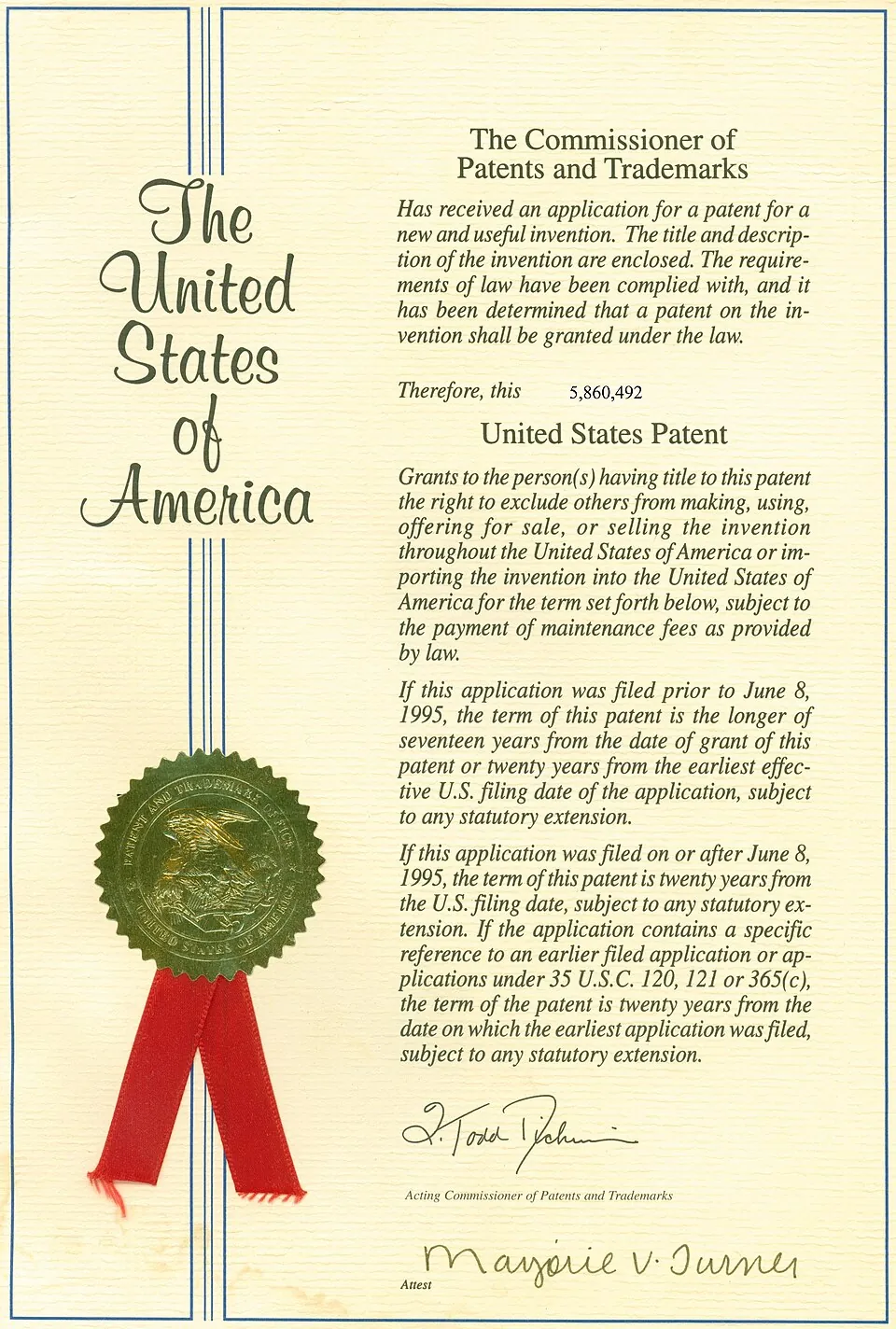
A trade secret and a patent protect different things in different ways. A trade secret protects confidential business information — a formula, process, customer list, or method — for as long as the owner keeps it secret and it retains independent economic value. Protection under CUTSA is automatic and requires no registration, but it evaporates the moment the information becomes public or is independently discovered or reverse engineered. A patent, by contrast, is a federally granted right obtained by publicly disclosing an invention to the U.S. Patent and Trademark Office. It lasts for a limited term — generally twenty years for utility patents — and gives the owner the exclusive right to make, use, and sell the invention even against someone who independently develops it. The central tradeoff is disclosure: patents require the invention to be published, while trade secrets require it to be hidden. A business choosing between them weighs how long the advantage will last, whether the information can be kept secret in practice, and whether independent discovery by competitors is likely. Some information is far better protected as a perpetual trade secret than as a patent that would expire and reveal the underlying details to the world.
How long do I have to file a trade secret misappropriation claim in California?
California Civil Code section 3426.6 gives a plaintiff three years to bring a trade secret misappropriation claim. The three-year period does not necessarily begin when the misappropriation occurs; instead, it runs from the date the misappropriation was discovered or, through the exercise of reasonable diligence, should have been discovered. Because trade secret theft is frequently concealed, this discovery rule protects owners who could not reasonably have known their information was taken. CUTSA also provides that a continuing misappropriation constitutes a single claim, so the limitations clock starts once and does not reset with each subsequent use of the secret. Practically, this means a business that suspects misappropriation should act promptly — investigating, preserving evidence such as access logs and device data, and consulting counsel — because delay can bar an otherwise valid claim even while the misuse continues.
References
California Civil Code Section 3426.1 (Definitions). California Legislature
California Civil Code Section 3426.2 (Injunctive Relief). California Legislature
California Civil Code Section 3426.3 (Damages). California Legislature
California Civil Code Section 3426.6 (Statute of Limitations). California Legislature