
Injunctions and Restraining Orders in California: Emergency Court Protection When You Need It Most
When immediate action is needed to prevent harm, California courts can issue emergency orders. Understanding TROs, preliminary injunctions, and permanent injunctions is essential.
What Is an Injunction Under California Law?
An injunction is a court order requiring a party to do or refrain from doing a specific act, used when monetary damages alone would be inadequate to prevent irreparable harm. Most legal disputes unfold over months or years. Complaints are filed, discovery is conducted, motions are briefed, and eventually a case goes to trial or settles. But some situations cannot wait for the ordinary course of litigation. When a former business partner is destroying company records, when a neighbor is making credible threats of violence, when an ex-employee is about to share trade secrets with a competitor — the harm may be immediate and irreversible if the court does not act quickly.
This is the domain of injunctive relief: court orders that require a party to do something or, more commonly, to stop doing something. California law provides three distinct forms of injunctive relief, each designed for a different stage of the legal proceeding and each subject to its own procedural requirements. Understanding the differences between temporary restraining orders, preliminary injunctions, and permanent injunctions is essential for anyone who may need emergency court protection — or who may need to defend against it.
How Do You Obtain a Temporary Restraining Order in California?
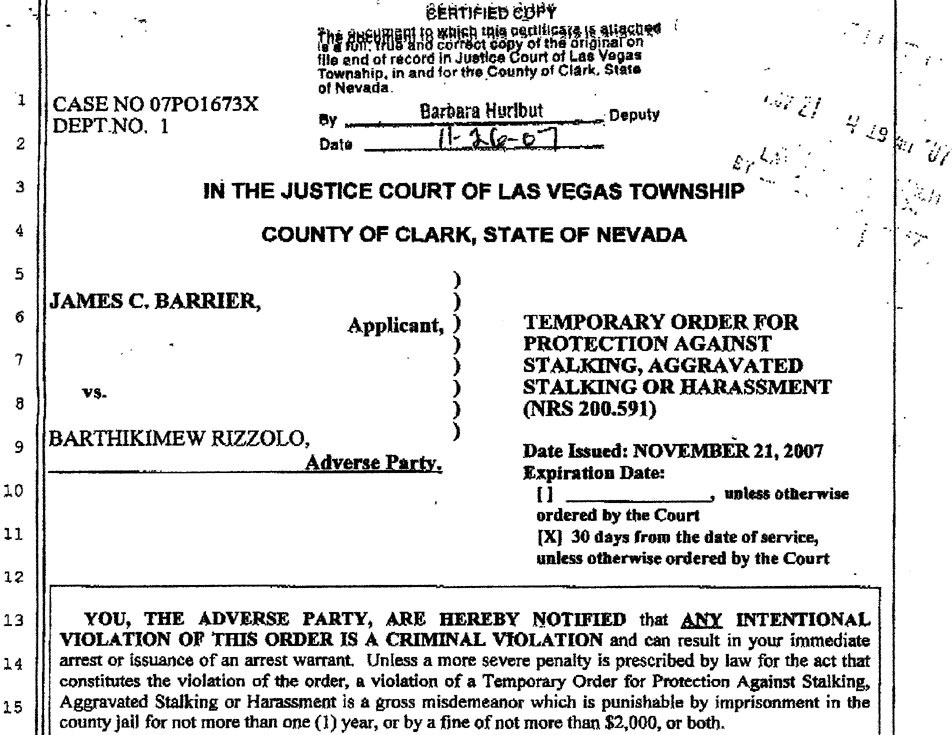
A temporary restraining order is the most urgent form of injunctive relief available under California law. Governed by Code of Civil Procedure Section 527, a TRO can be obtained on an ex parte basis — meaning without the opposing party being present or having an opportunity to respond. This is an extraordinary remedy, and courts grant it only when the applicant can demonstrate that immediate and irreparable injury will occur before the matter can be heard on regular notice.
The ex parte nature of TROs reflects the tension at the heart of emergency judicial relief. Due process ordinarily requires that both sides be heard before a court issues an order affecting their rights. But when waiting for a full hearing would render the ultimate relief meaningless — because the harm will have already occurred — the law permits a temporary order based on one party's showing alone. To obtain a TRO, the applicant must file a verified application supported by declarations under penalty of perjury, demonstrating both the likelihood of prevailing on the merits and the immediacy of the threatened harm.
A TRO is inherently temporary. It typically remains in effect for 15 to 25 days — just long enough for the court to schedule a hearing where both parties can present evidence and argument on whether a preliminary injunction should issue. If the applicant fails to seek a preliminary injunction or the court declines to issue one, the TRO dissolves and the parties return to their pre-order positions.
What Must You Prove to Get a Preliminary Injunction in California?
A preliminary injunction is a more substantive form of relief that follows a noticed hearing where both parties have the opportunity to present their case. The standard for obtaining a preliminary injunction is more demanding than for a TRO, because the order will remain in effect for the duration of the litigation — potentially months or years.
California courts apply a two-part balancing test derived from the California Supreme Court's decision in IT Corp. v. County of Imperial (1983). The court evaluates two interrelated factors: first, the likelihood that the applicant will prevail on the merits of the underlying claim; and second, the relative balance of hardships — that is, the interim harm the applicant would suffer without the injunction compared to the harm the respondent would suffer with it. These factors operate on a sliding scale. If the applicant makes a very strong showing on the merits, less evidence of irreparable harm may be required, and vice versa.
In practice, the balancing of hardships often proves decisive. A court may be reluctant to issue an injunction that effectively puts a company out of business, even if the applicant's legal claims appear strong. Conversely, when the threatened harm is severe and the burden on the respondent is modest — such as simply maintaining the status quo — courts are more willing to grant relief even when the merits are less clear.
Bond Requirements
One aspect of injunctive relief that parties often overlook until it becomes an obstacle is the bond requirement. Under Code of Civil Procedure Section 529, a court issuing an injunction may require the applicant to post a bond or undertaking to protect the respondent from damages if the injunction is later found to have been wrongly issued. The purpose of the bond is to ensure that a party who is restrained by court order — and who ultimately prevails on the merits — has a source of recovery for the losses incurred during the period the injunction was in effect.
The amount of the bond is within the court's discretion and can range from nominal to substantial, depending on the potential harm to the respondent. In commercial disputes, where an injunction might prevent a competitor from entering a market or a contractor from completing a project, bond amounts can reach hundreds of thousands of dollars. For individuals seeking injunctive relief, the bond requirement can be a significant barrier, particularly in cases where the applicant's financial resources are limited.
Civil Harassment Restraining Orders
Code of Civil Procedure Section 527.6 provides a separate, streamlined procedure for obtaining restraining orders in cases of civil harassment. This statute is designed for situations involving unlawful violence, credible threats of violence, or a knowing and willful course of conduct directed at a specific person that serves no legitimate purpose and would cause a reasonable person to suffer substantial emotional distress. It covers disputes between neighbors, coworkers, acquaintances, and strangers — essentially any relationship that does not fall under the Domestic Violence Prevention Act or other specialized protective order statutes.
The process begins with the petitioner filing a request for a restraining order, typically accompanied by a declaration describing the harassment. The court may issue a temporary restraining order immediately, without hearing from the respondent, if the petition demonstrates reasonable proof of harassment. A full hearing is then scheduled within 21 to 25 days, at which both parties can present evidence, call witnesses, and cross-examine the opposing party. The petitioner must prove harassment by clear and convincing evidence — a higher standard than the preponderance standard used in most civil cases.
If the court grants the order after hearing, the civil harassment restraining order can remain in effect for up to five years and may be renewed. The order typically prohibits the respondent from contacting, harassing, or coming within a specified distance of the petitioner, the petitioner's home, and the petitioner's workplace.
Workplace Violence Restraining Orders
Code of Civil Procedure Section 527.8 provides a parallel mechanism for workplace violence restraining orders. Under this statute, an employer may seek a restraining order on behalf of an employee who has suffered unlawful violence or a credible threat of violence from any individual that can reasonably be construed to be carried out at the workplace. This provision recognizes that workplace violence is a distinct category of risk that may require protective measures beyond what individual employees can obtain on their own.
The procedural framework mirrors that of civil harassment restraining orders: a temporary order may issue ex parte, followed by a hearing within 21 to 25 days. The employer must show by clear and convincing evidence that the employee has been subjected to unlawful violence or credible threats. Workplace violence restraining orders can protect not only the targeted employee but also other employees and members of the public who are present at the workplace.
Defending Against Injunctions
Not every request for an injunction is justified, and respondents have meaningful rights in injunction proceedings. A respondent can challenge the factual basis of the application, argue that the applicant has not demonstrated a likelihood of success on the merits, present evidence that the balance of hardships favors denying the injunction, or raise procedural defenses such as improper notice or insufficient evidence.
One of the most effective defenses against a preliminary injunction is demonstrating that the applicant has an adequate remedy at law — that is, money damages would fully compensate for the harm alleged. Injunctive relief is an equitable remedy, and courts generally will not grant it when the injury can be adequately redressed through a damages award. If the applicant's real complaint is a financial loss that can be quantified and compensated, the court may decline to issue an injunction and instead allow the case to proceed to trial on the damages claim alone.
Violation of any injunction or restraining order is a serious matter. It can result in contempt of court proceedings, fines, and even incarceration. Criminal penalties may also apply under Penal Code Section 166. Whether you are seeking injunctive relief or defending against it, the stakes are high and the procedural requirements are exacting. Legal counsel experienced in injunction practice is essential to navigating these proceedings effectively.
Frequently Asked Questions
What is the difference between a TRO and a preliminary injunction in California?
A temporary restraining order and a preliminary injunction are both forms of injunctive relief in California, but they differ in duration, procedure, and scope. A TRO is an emergency order issued on short notice or even without notice to the opposing party when there is an immediate risk of irreparable harm. Under Code of Civil Procedure Section 527, a TRO can be granted ex parte — meaning without the other party being present — and remains in effect for a maximum of 15 days, though it can be extended for an additional 15 days for good cause. A preliminary injunction, by contrast, requires a noticed hearing where both parties have the opportunity to present evidence and legal arguments. The court evaluates the likelihood of success on the merits and the balance of hardships between the parties, and the injunction remains in effect until the case is resolved at trial or further order of the court. Typically, a TRO is sought first to provide immediate protection, and a hearing on the preliminary injunction is scheduled within the TRO period. The party seeking injunctive relief must generally post an undertaking or bond to protect the restrained party against damages if the injunction is later found to have been wrongfully issued.
How quickly can I get a temporary restraining order in California?
In urgent situations, you can obtain a temporary restraining order in California within one to three business days through an ex parte application, and in some cases the same day you apply. The process begins by filing an ex parte application with the court that includes a declaration under penalty of perjury describing the specific facts demonstrating the need for immediate relief and explaining why irreparable harm will result if the order is not granted before a full hearing can be held. Under California Rules of Court Rule 3.1201, the applicant must give notice to the opposing party of the ex parte hearing, typically by 10:00 a.m. the court day before the hearing, though courts may waive notice requirements when there is a genuine risk that providing notice would enable the opposing party to take harmful action before the court can act. Courts in different counties have varying procedures — some hear ex parte matters every morning, while others designate specific days. If the court grants the TRO, it will also set a hearing date for the preliminary injunction, usually within 15 to 22 days. Having your application prepared by an attorney significantly increases the likelihood of obtaining the order and ensures all procedural requirements are met.
What must I prove to get an injunction in California?
To obtain an injunction in California, you must demonstrate that the balance of equities favors granting the order by proving several key elements. For a preliminary injunction, Code of Civil Procedure Section 526 requires that you show a likelihood of prevailing on the merits of your underlying claim and that the balance of hardships tips in your favor — meaning you will suffer greater harm without the injunction than the defendant will suffer with it. Additionally, you must demonstrate that you will suffer irreparable harm without the injunction, meaning that monetary damages alone would not adequately compensate you for the injury. Common grounds for injunctive relief include preventing the dissipation or destruction of property, stopping ongoing breaches of contract that cause continuing harm, preventing the disclosure of trade secrets or confidential information, and halting conduct that violates a party's legal rights. For a TRO, the standard is similar but the court applies a heightened urgency requirement, evaluating whether the applicant faces immediate and irreparable injury that justifies acting before a full hearing. The court has broad discretion in fashioning injunctive relief and may impose conditions on either party.
References
California Code of Civil Procedure Section 527 (Injunctions). California Legislature
California Code of Civil Procedure Section 527.6 (Civil Harassment). California Legislature
California Code of Civil Procedure Section 527.8 (Workplace Violence). California Legislature
California Code of Civil Procedure Section 529 (Bond Requirements). California Legislature