
Slip and Fall Injuries in California: When Property Owners Must Answer for Dangerous Conditions
Premises liability law in California places a duty of care on property owners. When that duty is breached and someone is injured, the law provides a path to compensation.
When Is a Property Owner Liable for a Slip and Fall Injury?
A slip and fall claim is a type of premises liability action in which an injured person seeks compensation from a property owner who failed to maintain safe conditions. A slip and fall may sound like a minor incident — the kind of thing people laugh about after the fact. But anyone who has suffered a serious fall on someone else's property knows there is nothing trivial about a fractured hip, a traumatic brain injury, or a spinal cord injury that changes the course of a life. In California, the law recognizes the severity of these injuries and holds property owners accountable when their negligence creates dangerous conditions.
The legal foundation for premises liability in California is Civil Code Section 1714, which establishes a broad principle: every person is responsible for injuries caused by their want of ordinary care or skill in the management of their property. This statute does not distinguish between homeowners and commercial landlords, between shopping mall operators and restaurant owners. The duty applies to anyone who owns, leases, occupies, or controls property where others may be present.
The California Supreme Court reinforced this principle in Rowland v. Christian (1968), one of the most important premises liability decisions in the state's history. Before Rowland, California followed the common law approach of categorizing visitors as invitees, licensees, or trespassers, with different levels of care owed to each. The court swept away those rigid categories and replaced them with a single standard: property owners owe a duty of ordinary care to all persons who come onto their property. The foreseeability of harm, the burden of prevention, and the closeness of the connection between the owner's conduct and the injury are the factors that matter — not the label attached to the visitor.
What Must You Prove in a California Slip and Fall Case?
Winning a slip and fall case in California requires proving four elements, each of which must be established by a preponderance of the evidence. The first is duty — that the property owner owed a duty of care to the injured person. Under Rowland and Civil Code 1714, this element is usually straightforward. If you were lawfully on the property, the owner owed you a duty of ordinary care.
The second element is breach — that the property owner failed to meet the standard of care. This is where most slip and fall cases are won or lost. A breach can take many forms: failing to clean up a spill in a grocery store aisle, neglecting to repair a broken staircase railing, allowing ice to accumulate on a walkway, or failing to provide adequate lighting in a parking structure. The question is always whether the owner acted as a reasonably prudent person would have acted under the same circumstances.
The third element is causation. The plaintiff must show that the property owner's breach of duty was a substantial factor in causing the injury. This means establishing a direct connection between the dangerous condition and the harm suffered. If you slipped on a wet floor but were injured because of a pre-existing condition unrelated to the fall, the causation analysis becomes more complex.
The fourth element is damages — that the plaintiff suffered actual harm as a result of the fall. This includes medical expenses, lost wages, pain and suffering, and any other losses that flow from the injury. California courts allow recovery for both economic damages, which can be calculated with precision, and non-economic damages like emotional distress, which are inherently subjective but no less real.
The Notice Requirement
One of the most critical issues in any slip and fall case is whether the property owner had notice of the dangerous condition. California law recognizes two types of notice: actual notice and constructive notice. Actual notice means the owner knew about the hazard. A store employee who sees a spill and walks past it without cleaning it up has given the store actual notice of the dangerous condition.
Constructive notice is more nuanced. It means the condition existed for a sufficient period of time that the owner should have discovered it through the exercise of reasonable care. A puddle of water that has been on a supermarket floor for thirty minutes, with visible foot traffic tracks through it, likely satisfies the constructive notice standard. A bottle of olive oil that fell from a shelf five seconds before a customer walked through the aisle probably does not.
The distinction matters enormously. If a hazardous condition is created by a third party — a customer who drops a drink, for example — the property owner is not automatically liable. The plaintiff must show that the owner knew or should have known about the condition and failed to remedy it within a reasonable time. This is why preservation of evidence is so important in slip and fall cases. Surveillance footage, incident reports, and maintenance logs can all establish how long a condition existed before the injury occurred.
What Types of Hazards Lead to Slip and Fall Claims?
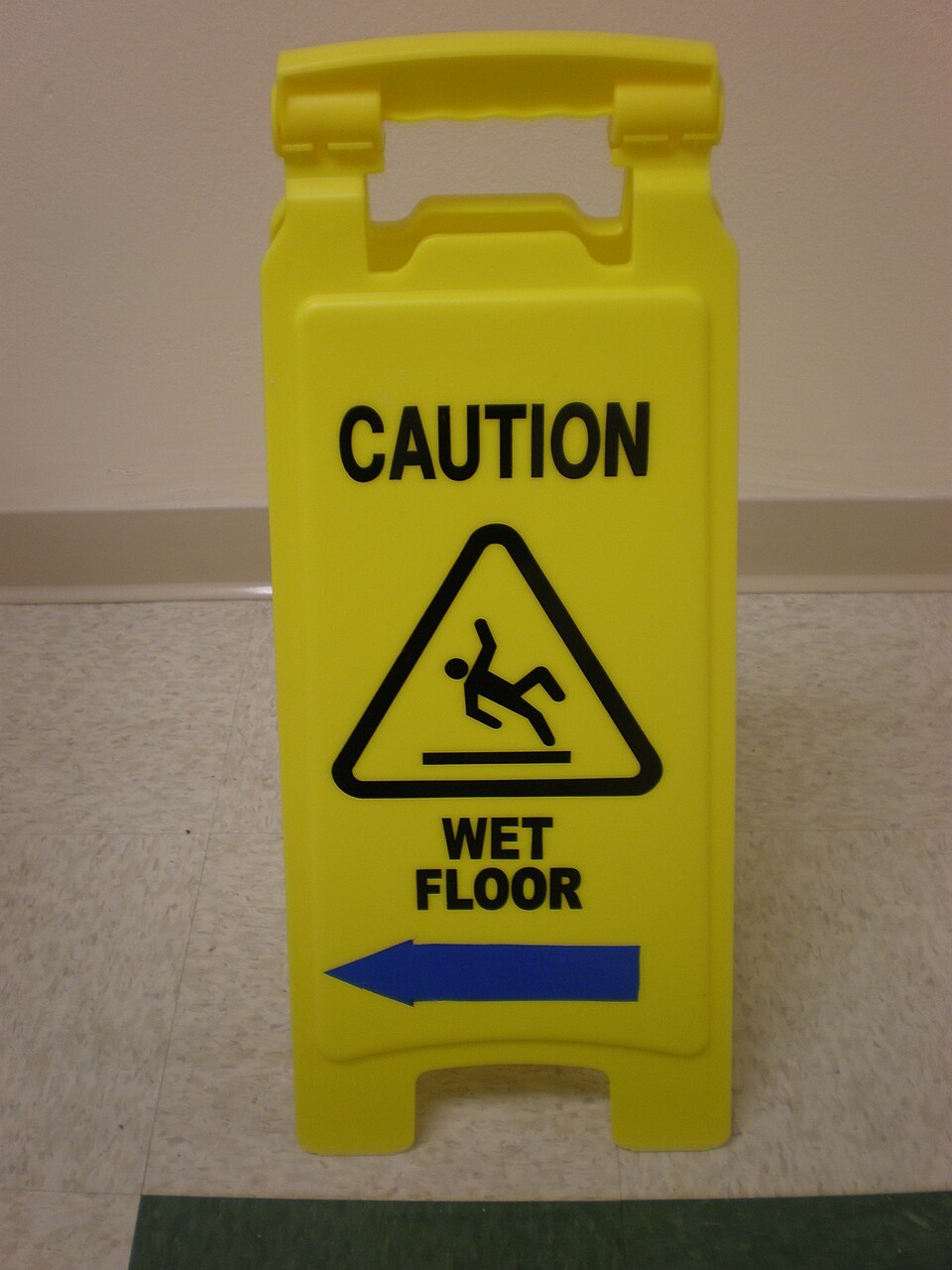
Slip and fall injuries arise from a wide variety of dangerous conditions. Wet or freshly mopped floors without warning signs are among the most common. Uneven sidewalks, cracked pavement, loose carpeting, and poorly maintained stairways account for a significant number of cases. Inadequate lighting that obscures hazards, cluttered walkways in retail stores, and missing handrails on staircases all create foreseeable risks of injury.
In my practice, I have seen cases involving every type of property — from a residential tenant who fell on a staircase with a broken step the landlord had been warned about repeatedly, to a hotel guest who slipped on a freshly waxed lobby floor with no warning sign in place. The common thread is always the same: a condition the owner knew about or should have known about, and a failure to take reasonable steps to protect people from harm.
Comparative Fault in California
California follows a pure comparative fault system, which means that a plaintiff's own negligence does not bar recovery but does reduce it. If a jury determines that you were 30 percent at fault for your injuries — perhaps because you were looking at your phone when you walked into a clearly visible hazard — your damages award will be reduced by 30 percent. Even a plaintiff who is found to be 90 percent at fault can still recover 10 percent of their damages.
Property owners frequently argue comparative fault as a defense, claiming that the injured person was not paying attention, was wearing inappropriate footwear, or ignored warning signs. These arguments can be effective, which is why documenting the scene of the fall as thoroughly as possible is essential. Photographs of the hazard, the surrounding area, any warning signs or lack thereof, and the footwear worn at the time of the fall all become critical evidence.
Statute of Limitations and Government Claims
Under California Code of Civil Procedure Section 335.1, a person injured in a slip and fall has two years from the date of injury to file a lawsuit. Missing this deadline almost always results in the permanent loss of the right to seek compensation. There are narrow exceptions — for minors, for plaintiffs who were mentally incapacitated, or where the injury was not immediately discoverable — but relying on exceptions is never a sound legal strategy.
When a slip and fall occurs on government property — a public sidewalk, a city park, a county courthouse — the timeline is dramatically compressed. Under Government Code Section 911.2, a claim must be filed with the relevant government agency within six months of the date of injury. This is not a lawsuit but a formal administrative claim that must precede any litigation. Failing to file within this six-month window typically extinguishes the right to sue the government entity entirely.
The government claims process is one of the most frequently missed deadlines in personal injury law. Many people do not realize that different rules apply to public property until it is too late. If you are injured on government-owned or government-maintained property, consulting an attorney promptly is not merely advisable — it is essential to preserving your rights.
When to Seek Legal Counsel
Not every slip and fall warrants a lawsuit. Minor incidents with no lasting injury may not justify the time and expense of litigation. But when a fall results in significant medical bills, lost income, chronic pain, or permanent disability, the property owner's responsibility should be examined carefully. The duty of care established by Civil Code 1714 and reinforced by Rowland v. Christian exists precisely for these situations — to ensure that those who control property bear the cost of the harm caused by their failure to maintain it safely.
Frequently Asked Questions About Slip and Fall Claims
What must I prove in a California slip and fall case?
To prevail in a California slip and fall case, you must prove four elements: that the property owner or occupier owed you a duty of care, that they breached that duty by failing to maintain safe conditions or warn of known hazards, that their breach directly caused your fall and resulting injuries, and that you suffered actual damages. Under California Civil Code Section 1714, property owners have a general duty to maintain their premises in a reasonably safe condition. You must demonstrate that the owner knew or should have known about the dangerous condition and failed to remedy it within a reasonable time. Evidence such as maintenance logs, surveillance footage, incident reports, and witness testimony can establish that the hazard existed long enough that a reasonable owner would have discovered and addressed it. California courts evaluate whether the owner acted as a reasonably prudent person would under similar circumstances, considering factors like the foreseeability of the harm and the burden of preventing it.
How long does a property owner have to fix a hazardous condition?
California law does not specify an exact timeframe for property owners to fix hazardous conditions, but requires that they act within a reasonable period after discovering or being put on notice of the danger. What constitutes reasonable depends on the nature and severity of the hazard, the resources available to the owner, and the likelihood that someone will be harmed. A large puddle in a busy grocery store aisle may need to be addressed within minutes, while a cracked sidewalk on private property might allow days for repair. The key legal question is whether the owner had actual or constructive notice of the condition. Constructive notice means the hazard existed for a sufficient time that a reasonable inspection would have revealed it. Courts consider factors such as the owner's inspection schedule, the visibility of the hazard, the amount of foot traffic in the area, and whether temporary warnings like caution signs or barriers were deployed while awaiting permanent repair.
What is the statute of limitations for slip and fall claims in California?
The statute of limitations for slip and fall injury claims in California is two years from the date of the fall under Code of Civil Procedure Section 335.1. This means you must file your lawsuit within two years or your claim will be permanently barred, regardless of how strong your case may be. If your slip and fall occurred on government property — such as a public sidewalk, government building, or municipal park — you face a much shorter deadline: you must file an administrative tort claim with the relevant government entity within six months of the injury under Government Code Section 911.2. Only after the government denies your claim or fails to respond within 45 days can you then file a lawsuit, and you must do so within six months of the denial. The discovery rule may extend the deadline in rare cases where the injury was not immediately apparent, but this exception is narrowly applied in slip and fall cases since the injury-causing event is typically obvious.
References
California Civil Code Section 1714 (General Duty of Care). California Legislature
California Code of Civil Procedure Section 335.1 (Statute of Limitations). California Legislature
California Government Code Section 911.2 (Government Claims Deadline). California Legislature
Rowland v. Christian, 69 Cal.2d 108 (1968). Justia