
Zoning Law in California: Navigating Land Use Regulations and Permits
Zoning determines what you can build, where you can build it, and how your property can be used. Understanding California's complex land use framework is essential for any property owner or developer.
What Are the Zoning Rules That Shape Every Property?
Zoning law is the body of municipal regulations that governs how land and buildings may be used within specific geographic districts of a city or county. Every piece of land in California is governed by zoning regulations that most property owners never think about until they want to change something. You want to add a second unit to your property, convert a garage into a studio, open a home-based business, or build an addition. Then you discover that the zoning code has something to say about all of it — and what it says may not be what you want to hear.
Zoning is the mechanism by which local governments control land use within their jurisdictions. It determines whether a parcel is designated for residential, commercial, industrial, or agricultural use, and within each category, it regulates building height, setbacks, lot coverage, density, parking requirements, and dozens of other specifications. These regulations are not suggestions; they are enforceable laws, and building without compliance can result in stop-work orders, fines, and mandatory demolition of unpermitted construction.
Which Level of Government Controls Zoning Laws?
Local government controls zoning. In California, cities and counties adopt and enforce zoning ordinances, using authority granted and limited by the state. The California Constitution lets a county or city make and enforce local police-power ordinances that do not conflict with general laws (Article XI, Section 7), and the state Planning and Zoning Law (Government Code Section 65000 and following) sets out how cities and counties plan and zone.
The Legislature has said it intends to impose only a minimum of limitation so that counties and cities keep the maximum degree of control over local zoning (Government Code Section 65800). Government Code Section 65850 lists what a zoning ordinance may regulate, including the use of buildings and land, the height and bulk of buildings, lot size and coverage, setbacks and parking. Charter cities have more independence: under Section 65803, the state zoning chapter applies to a charter city only to the extent its charter or ordinances adopt it, except where a statute provides otherwise.
Local control has limits. Zoning must be consistent with the general plan, as discussed below, and a local ordinance cannot conflict with state law. Federal statutes, such as the Fair Housing Act and the Religious Land Use and Institutionalized Persons Act, also constrain some zoning decisions. In recent years the Legislature has used its authority most visibly to override local rules in single-family zones.
Single-Family (SFR) Zoning in California
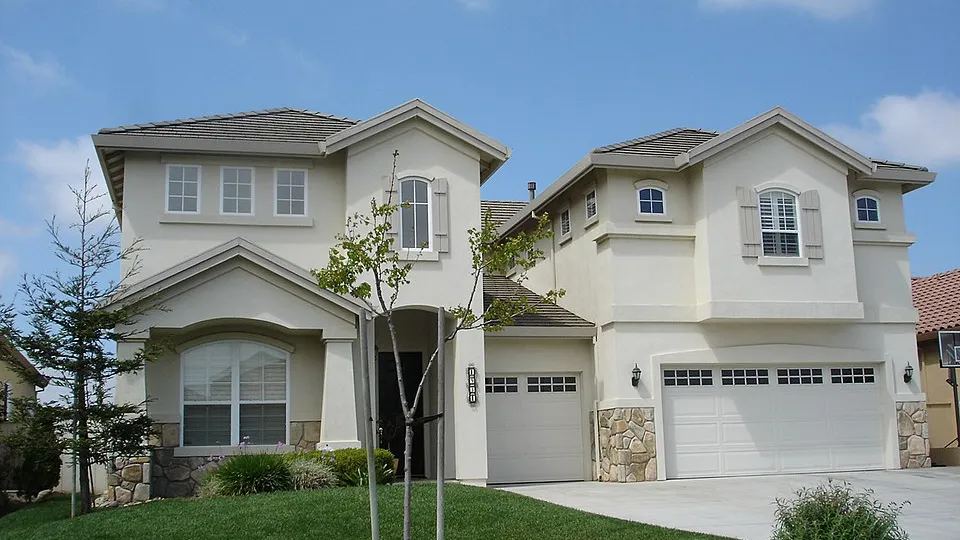
Single-family residential (SFR) zoning, often labeled R-1, is a local zoning district whose base rule is one detached house per lot. In California that rule no longer stands on its own, because state law now requires cities and counties to allow additional units on most single-family lots.
SB 9: Two Units on a Single-Family Lot
Senate Bill 9, codified at Government Code Section 65852.21, requires a local agency to consider a project of up to two residential units in a single-family zone ministerially, without discretionary review or a hearing, if the project qualifies. The agency may deny a qualifying project only if its building official makes a written finding of a specific, adverse impact on public health and safety that cannot feasibly be mitigated. The parcel must be in a city that includes part of a Census Bureau urbanized area or urban cluster, or for unincorporated land, wholly within one. The project cannot require demolishing or altering rent-restricted housing, rent-controlled housing, or housing a tenant has occupied in the last three years, and historic districts, listed historic properties and certain hazard and resource sites are excluded.
The city or county may apply objective zoning, subdivision and design standards, but not ones that would physically prevent two units or keep either unit from reaching 800 square feet. It may require side and rear setbacks of up to four feet and up to one parking space per unit, though no parking may be required within a half mile walk of a high-quality transit corridor or major transit stop, or where a car-share vehicle is within one block. Rentals of the units must be for terms longer than 30 days. A companion statute, Government Code Section 66411.7, provides for urban lot splits in the same zones. Whether SB 9 binds charter cities has been litigated, so owners in a charter city should confirm its current status.
ADUs on Single-Family Lots
State ADU law, renumbered in 2024 and now found at Government Code Section 66310 and following, separately allows accessory dwelling units on lots zoned for single-family or multifamily use. A local ADU ordinance cannot require a minimum lot size (Section 66314), and it cannot use size, lot coverage, floor area ratio or similar limits to block an ADU of at least 800 square feet with four-foot side and rear setbacks (Section 66321). As a result, most single-family lots in California can now hold more than one home, though what a particular lot allows depends on its location, the local ordinance and which state program the owner uses.
The General Plan and the Zoning Code
California's land use framework operates on two levels. Every city and county is required by Government Code Section 65300 to adopt a general plan — a comprehensive, long-range document that establishes the community's vision for growth and development. The general plan addresses land use, housing, transportation, open space, conservation, noise, and safety, among other elements.
The zoning code is the implementing tool for the general plan. While the general plan establishes broad policies and goals, the zoning code translates those policies into specific, parcel-level regulations. Under the consistency doctrine established by Government Code Section 65860, a city's zoning must be consistent with its general plan. When the two conflict, the general plan controls, and the zoning must be amended to bring it into conformity.
How Do You Obtain a Variance or Conditional Use Permit?
When a property owner wants to use their land in a way that does not conform to the zoning code, they have several options. A variance allows a departure from specific zoning requirements — setback distances, height limits, lot coverage ratios — when strict application of the code would create an unnecessary hardship due to the property's unique physical characteristics. Variances are not granted simply because the owner would prefer different rules; the applicant must demonstrate that the property itself presents conditions not shared by neighboring properties.
Conditional use permits (CUPs) allow uses that are permitted in a particular zone only with special approval and conditions. A church in a residential zone, a restaurant with outdoor dining, or a daycare facility in a commercial area might all require CUPs. The permitting authority can impose conditions designed to minimize the impact of the use on surrounding properties — hours of operation, noise limitations, parking requirements, and landscaping buffers are common conditions.
ADUs: California's Housing Revolution
Perhaps the most significant zoning development in recent California history is the state's aggressive promotion of accessory dwelling units (ADUs). Through a series of laws enacted since 2016, the legislature has systematically overridden local zoning restrictions that previously made it difficult or impossible to add second units to residential properties.
Under state ADU law, now codified at Government Code Sections 66310 through 66342 (formerly Sections 65852.2 and 65852.22), homeowners can build ADUs on most single-family and multifamily residential lots, and junior ADUs within single-family homes, regardless of local zoning restrictions on density, lot coverage, or floor area ratio. Local governments cannot impose a minimum lot size for ADUs, cannot set a maximum ADU size below 850 square feet (1,000 square feet for an ADU with more than one bedroom), and cannot impose parking standards for an ADU within one-half mile walking distance of public transit. These state-level preemptions represent a fundamental shift in the traditional balance between state housing policy and local land use control.
CEQA and the Environmental Review Process
Larger development projects in California must comply with the California Environmental Quality Act (CEQA), which requires an assessment of the project's potential environmental impacts before it can be approved. CEQA review can add months or years to the approval process and generate significant costs, but it also provides affected community members with an opportunity to participate in the decision-making process and challenge projects that may harm the environment.
For smaller projects, categorical exemptions and negative declarations can streamline the CEQA process. But for significant developments — commercial centers, residential subdivisions, industrial facilities — a full environmental impact report (EIR) may be required, with detailed analysis of traffic, noise, air quality, water resources, biological resources, and other potential impacts.
When Do Zoning Disputes Become Legal Battles?
Zoning disputes can escalate from administrative proceedings to courtroom litigation when a property owner challenges a local government's land use decision. Under Code of Civil Procedure Section 1094.5, the standard remedy is a petition for writ of administrative mandamus, which asks the court to review whether the local agency abused its discretion, failed to follow required procedures, or made a decision not supported by the evidence. These cases require detailed knowledge of both land use law and administrative procedure, and the deadlines for filing are strict — typically 90 days from the final administrative decision.
Frequently Asked Questions
How do I apply for a zoning variance in California?
To apply for a zoning variance in California, you must submit an application to your local planning department or zoning board, demonstrating that strict application of the zoning ordinance would cause unnecessary hardship due to unique physical characteristics of your property. The process typically begins with a pre-application meeting with planning staff to discuss feasibility. Your formal application must include a completed application form, site plans and project descriptions, a statement explaining the hardship that justifies the variance, evidence that the variance will not adversely affect neighboring properties or the general plan, and the required application fee. Under California Government Code Section 65906, a variance may be granted only when the applicant shows that because of special circumstances applicable to the property, including size, shape, topography, location, or surroundings, the strict application of the zoning ordinance deprives the property of privileges enjoyed by other properties in the same district. Personal hardship or economic considerations alone are generally insufficient. The application is reviewed by the planning commission or zoning board at a public hearing where neighbors and community members may comment.
What is a conditional use permit in California?
A conditional use permit in California is a discretionary approval granted by a local planning authority that allows a specific use of property that is not permitted by right under the applicable zoning district but may be appropriate with conditions designed to mitigate potential impacts on surrounding properties. Unlike a variance, which grants relief from a zoning standard, a CUP authorizes a use that the zoning code contemplates as potentially compatible with the district but subject to case-by-case review. Common uses requiring CUPs include churches in residential zones, home-based businesses that exceed standard home occupation limits, certain commercial uses in mixed-use districts, and telecommunications facilities. The CUP application process involves submitting detailed plans to the planning department, environmental review under the California Environmental Quality Act if applicable, a public hearing before the planning commission, and notice to surrounding property owners. Conditions imposed may include operating hour restrictions, parking requirements, landscaping buffers, noise limitations, and signage restrictions. CUPs typically run with the land and transfer to subsequent owners, though they may be revoked if conditions are violated.
Can I challenge a zoning decision in California?
Yes, you can challenge a zoning decision in California through several avenues depending on the nature of the decision and the local jurisdiction's procedures. The first step is typically an administrative appeal to the city council or board of supervisors, which must be filed within the timeframe specified in the local zoning ordinance — often 10 to 15 days after the decision. If the administrative appeal is unsuccessful, you may seek judicial review by filing a writ of mandate in superior court under Code of Civil Procedure Section 1094.5, which asks the court to review whether the administrative body proceeded in the manner required by law, whether the decision is supported by the findings, and whether the findings are supported by substantial evidence. The petition must typically be filed within 90 days of the final administrative decision. You may also challenge a zoning ordinance itself as invalid if it exceeds the municipality's authority, conflicts with state law, violates constitutional protections such as equal protection or due process, or constitutes a regulatory taking of property without just compensation under the Fifth Amendment. Inverse condemnation claims are available when a zoning restriction so severely limits property use that it effectively takes the property without compensation.
Which level of government controls zoning laws in California?
Cities and counties control zoning in California. They adopt and enforce zoning ordinances under the state Planning and Zoning Law (Government Code Section 65000 and following) and their police power under Article XI, Section 7 of the California Constitution. The state sets the limits: local zoning must be consistent with the general plan and cannot conflict with state law, and statutes such as SB 9 (Government Code Section 65852.21) and the state ADU law (Government Code Section 66310 and following) override local single-family zoning rules.
References
California Government Code Section 65300 (General Plan Requirement). California Legislature
California Government Code Section 66314 (Accessory Dwelling Units; formerly Section 65852.2). California Legislature
California Environmental Quality Act (CEQA). California Legislature
California Code of Civil Procedure Section 1094.5 (Administrative Mandamus). California Legislature
California Constitution, Article XI, Section 7 (Local Police Power). California Legislature
California Government Code Section 65000 (Planning and Zoning Law). California Legislature
California Government Code Section 65800 (Local Control of Zoning). California Legislature
California Government Code Section 65803 (Charter Cities). California Legislature
California Government Code Section 65850 (Scope of Zoning Ordinances). California Legislature
California Government Code Section 65852.21 (SB 9 Two-Unit Developments). California Legislature
California Government Code Section 66321 (ADU Size and Height Standards). California Legislature
California Government Code Section 65852.21 (SB 9 two-unit housing developments). California Legislature
California Government Code Section 66411.7 (SB 9 urban lot splits). California Legislature
Need help with a matter like this? See Brodsky Law's Zoning Law practice page, or contact Sasha Brodsky.